





Extended producer responsibility (EPR) rules are rapidly becoming central to the operations of large brands and marketplaces. By 2026, enterprises that still depend on spreadsheets and consulting-driven processes will struggle to follow multi-country regulations and category-specific rules.
This guide compares leading EPR compliance solutions for enterprise e-commerce—ForSURE, CIRT, Ecosurety, EPR Tradex and the API-first AlgoREP—so you can move from reactive, manual compliance to automated, audit-ready workflows across Europe, the United States and beyond.
Reading time: ~13 min
EPR regulation has evolved from isolated packaging rules to a systemic framework that touches almost every product category. In Europe and in a growing number of U.S. states, producers and importers must finance and report end-of-life management for packaging, electronics, batteries, textiles, furniture and more.
By 2026 several dynamics converge: EU marketplaces increasingly demand valid EPR registration numbers and can delist non-compliant offers; U.S. state laws such as those in California, Colorado and Oregon move from concept to enforcement; and new EPR categories keep appearing—professional packaging, sanitary textiles, fishing gear and others.
France’s AGEC law has accelerated this expansion since 2020. Producers or importers must calculate and declare eco contributions for each relevant stream, including packaging, textiles, electrical and electronic equipment, furniture, batteries and accumulators. With millions of units sold, manual spreadsheets and consulting-led workflows become slow, error-prone and impossible to keep aligned with real-time catalog changes. Enterprises therefore need EPR platforms that integrate as tightly as their existing tech stack.
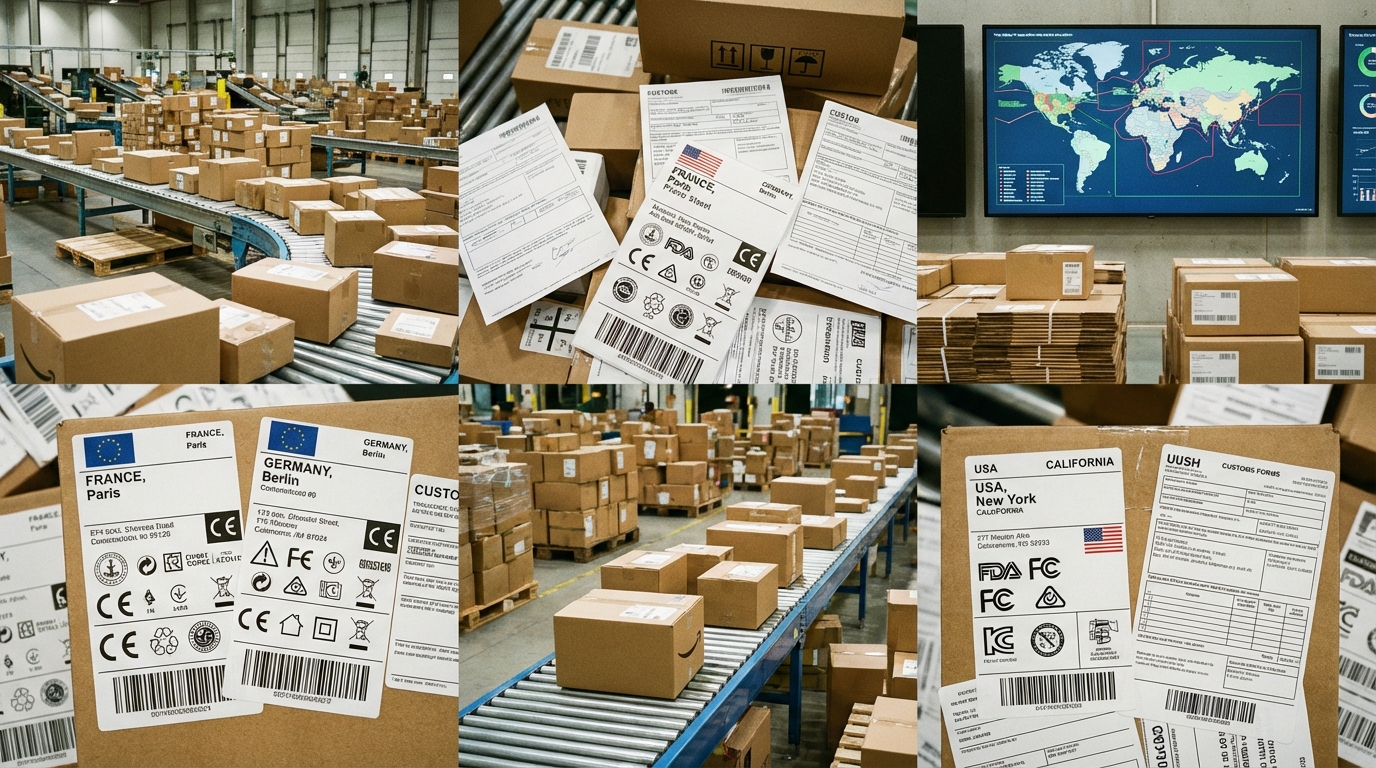
ForSURE centralizes EPR compliance for marketplace sellers on Amazon, eBay, Etsy and similar platforms. It automates product categorization, producer responsibility organization registrations, volume reporting and audit-ready submissions. Its strength is preventing delistings on marketplaces; however, it offers limited integration with internal ERP or PIM systems compared with an API-first tool like AlgoREP.
CIRT serves brands with large packaging footprints and strong sustainability goals. It unifies packaging data, automates EPR reporting, validates recyclability claims and tracks circular flows across jurisdictions. It is packaging-centric, so companies facing electronics, textiles or battery streams may require complementary tools; AlgoREP can cover those additional French streams automatically.
EPR Tradex focuses on credit trading and reporting for waste-management stakeholders. It suits producers or recyclers engaged in trading or offset mechanisms but does not replace an operational platform that ingests product data, calculates eco contributions and files declarations.
Ecosurety’s Collect platform manages packaging EPR and the UK plastic packaging tax. It excels in data aggregation and sustainability reporting, making it valuable for supply chains heavily exposed to the UK. It is less adapted if real-time automation across multiple product categories is the priority.
AlgoREP is built for producers and importers managing complex French EPR obligations while preparing for wider European expansion. An AI algorithm identifies applicable streams and computes eco contributions in real time from a barcode or product sheet. As an API-first platform, it embeds compliance directly in existing ERP, PIM and e-commerce systems. AlgoREP also maintains valid identifiers for French marketplaces and can be accessed at AlgoREP Compliancr.

Manual consulting can clarify complex legal questions but is not scalable for daily EPR management. Reactive data updates take weeks, each transcription step adds risk, and costs grow linearly with every new country or category. API-first automation updates calculations instantly, pulls authoritative data directly from ERP or PIM, and scales to new jurisdictions with minimal extra work. For marketplaces that enforce EPR numbers, continuous integration keeps offers visible and compliant.
Start by mapping where you are producer, importer or reseller and list all affected categories—packaging, electronics, textiles, batteries, furniture and others. Identify regions and sales channels with the highest regulatory or commercial risk, such as France and Germany for packaging or EU marketplaces that delist non-compliant offers. Shortlist platforms that match this profile: marketplace specialists like ForSURE, packaging-focused CIRT, UK-centric Ecosurety, or API-first AlgoREP for deep French and European coverage.
Evaluate each vendor’s integration capabilities, data model and ability to handle your transaction volume. Confirm they are ready for 2026 rules, including new U.S. state producer responsibility organizations and emerging categories such as professional packaging. Finally, weigh internal ownership versus outsourcing: AlgoREP delivers direct control within your existing stack while providing specialist algorithms and regulatory updates.

1. Run a diagnostic of current EPR streams, eco-organization relationships and manual tasks to set a baseline for time, risk and deadlines.
2. Engage AlgoREP for a tailored assessment by sharing catalog size, categories and system landscape through the dedicated interface.
3. Plan system integration with your technical teams, defining how AlgoREP connects to ERP, PIM and e-commerce platforms and which data sources are authoritative.
4. Configure rules and validate calculations by comparing AlgoREP outputs with your existing declarations, resolving any data quality gaps.
5. Automate declarations and reporting once validated, using dashboards so compliance teams retain full visibility.
6. Expand to new categories and countries by reusing the same infrastructure, turning each regulatory change into a configuration task rather than a new consulting project.
By following these steps, enterprises transform EPR compliance from a recurring burden into an integrated, predictable process that scales with growth. Learn more about the team and vision at the AlgoREP website.

